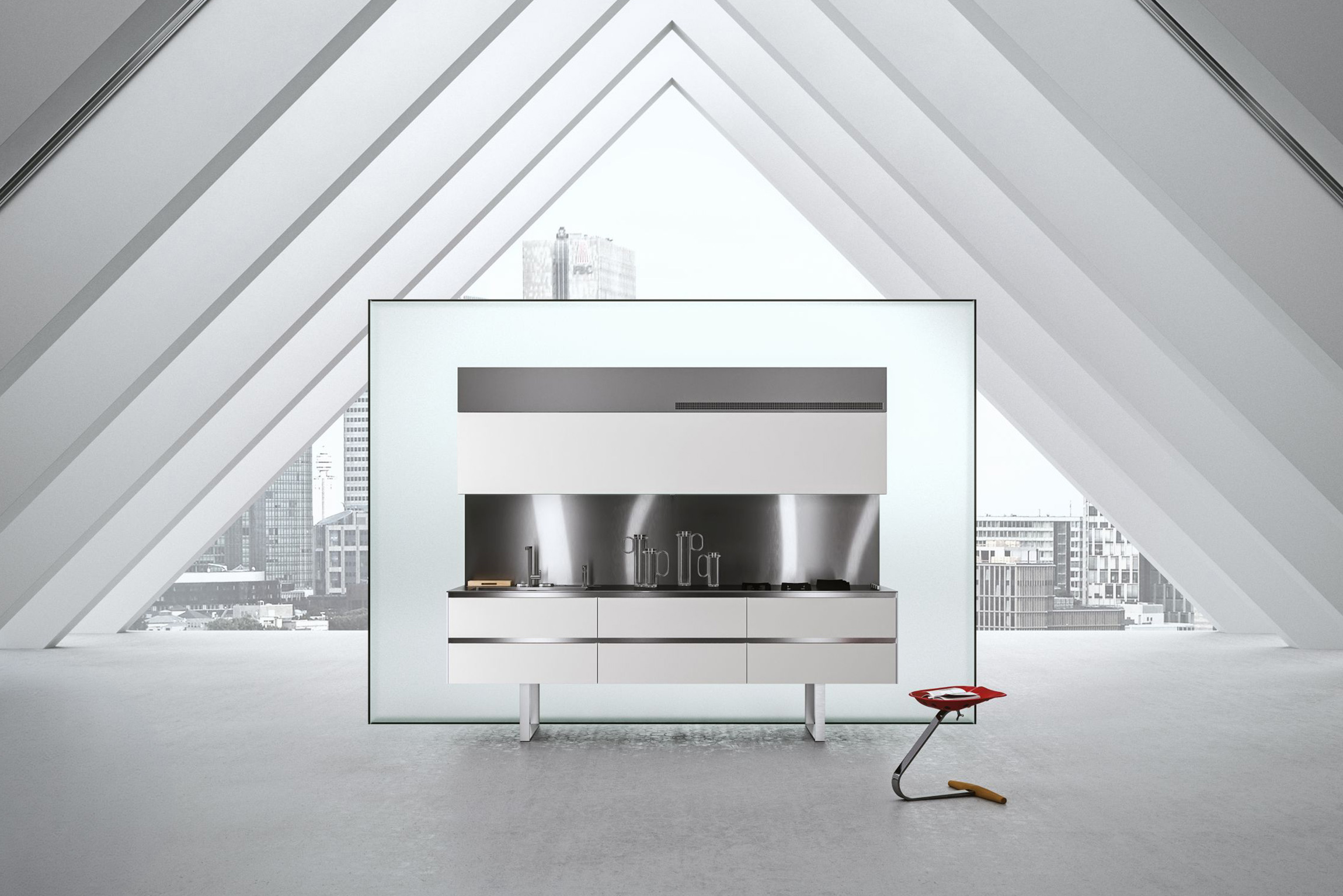
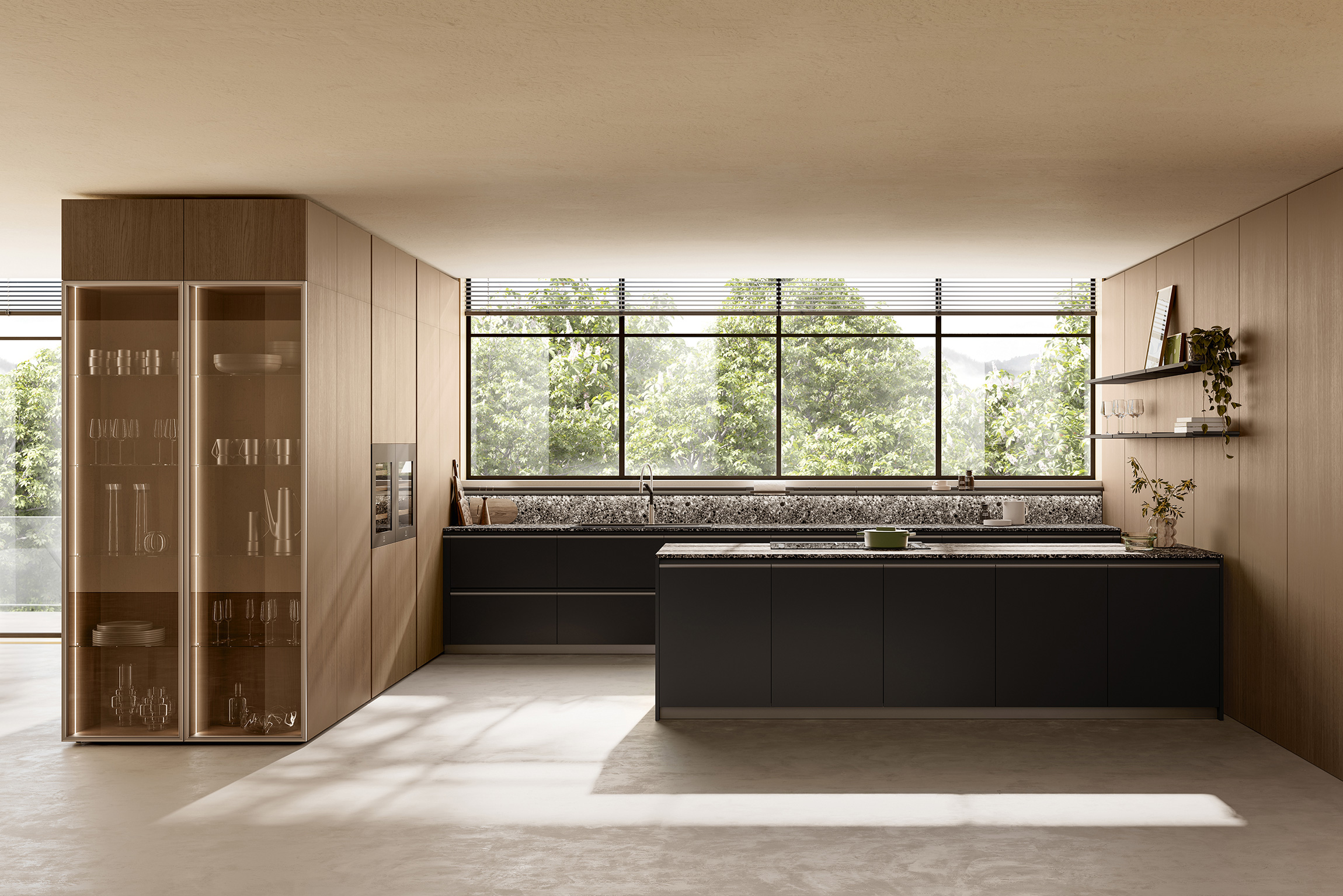
At Milan Design Week 2026, Snaidero presented a proposal that expands the concept of the kitchen into a more open and connected domestic system. Based on the idea of synesthesia, the Italian firm proposes a true continuity between the kitchen, dining room, and living room, where materials, forms, and function interact without defined boundaries. The kitchen is established as the core from which a fluid space is articulated, designed around experience and the relationship between rooms.
A system that connects spaces and functions
Snaidero's development stems from a vision that transcends the traditional kitchen model to become an integrated system. The Snaidero System introduces a modular logic where the module becomes the core of the design.
Far from proposing closed models, the system articulates proposals such as Elementi, Orbita, Frame, and Quadra, each with its own identity. This diversity allows for the construction of coherent compositions adapted to different spatial needs.
In this context, the kitchen ceases to be an isolated space and becomes integrated into a broader narrative. The relationship with the living and dining rooms occurs naturally, creating environments where design and everyday use flow seamlessly together. The domestic space is understood as a whole without rigid hierarchies.
Materials and finishes as the language of space
The expanded range of finishes reinforces this sense of continuity between spaces, incorporating new surfaces inspired by natural stone and high-performance ceramic materials. Neutral tones and textured materials create a shared aesthetic between the kitchen and living room.
Countertops and doors are enhanced with solutions that combine marble, granite, and ceramics, expanding the compositional possibilities. This approach allows the project to be developed from the perspective of materiality, generating a direct relationship between surface, light, and the perception of space. Material becomes an active design resource.
In addition, finishes such as milled aluminum-wood in American Walnut introduce a more tactile dimension. The combination of industrial processes and artisanal work results in surfaces that lend depth and character to the whole. The materiality defines the identity of the space.
From the integrated kitchen to the living room system
The evolution towards the living room is embodied in solutions like Modula, a system that extends the kitchen's design language to the rest of the home. Suspended bases, cabinets, and modular elements allow for the configuration of fitted walls and open layouts adapted to different uses. The kitchen expands into the living area without losing its coherence.
This design is complemented by elements such as the suspended drawer and the Rialto sideboards, which structure the space without fragmenting it. In its 360° version, Rialto becomes a central element connecting the kitchen, dining room, and living room, functioning as a light and permeable divider. The furniture acts as a transitional element between spaces.
The incorporation of open systems like Vista or wall-mounted solutions like Segno further expands the possibilities. The result is a cohesive domestic environment where each element contributes to defining an aesthetic and functional continuity between the different areas of the home. Integration is built through systems, not isolated pieces.
Icons and evolution of contemporary Snaidero design
Within this vision, iconic collections play a key role. Projects like Ola, developed in collaboration with Pininfarina, represent a synthesis of design, technology, and movement, with fluid forms that have evolved while maintaining their original identity. Design is understood as a continuous process over time.
Curved lines, structural details, and the use of materials like carbon fiber and mica lacquer reinforce its sculptural character. Beyond their function, these pieces integrate into the space as elements that define the perception and experience of the domestic environment. The kitchen approaches an almost sculptural dimension.
Meanwhile, proposals like Orbita introduce a new relationship with space through movement and geometry. The ability to rotate elements generates dynamic configurations that transform the interaction with the kitchen, reinforcing the idea of a design in constant dialogue with its inhabitants. The space ceases to be static and becomes dynamic.
marketing@snaidero.it
+39 0432 952111
Viale R. Snaidero, 15
Majano UD, Italy
Snaidero is an iconic Italian firm specializing in high-end kitchen design , founded in 1946 in Majano, in the province of Udine, by Rino Snaidero. From its inception, the brand has developed a pioneering vision of the kitchen as the heart of the home, combining design, research, innovation, and an identity deeply rooted in the evolution of contemporary living.
Today, Snaidero continues its evolution, building on an eight-decade history marked by collaborations with leading names in design and a consistent ability to anticipate new forms of domestic life. Its vision interprets the kitchen as a flexible, functional, and open environment where aesthetics, personalization, and material research are essential to everyday life.
With a presence in over 60 countries, Snaidero maintains a strong international presence supported by a qualified distribution network and a recognizable brand identity. This positioning establishes it as a benchmark for Made in Italy designer kitchens , based on manufacturing excellence, attention to detail, and a coherent evolution that blends history, innovation, and future.