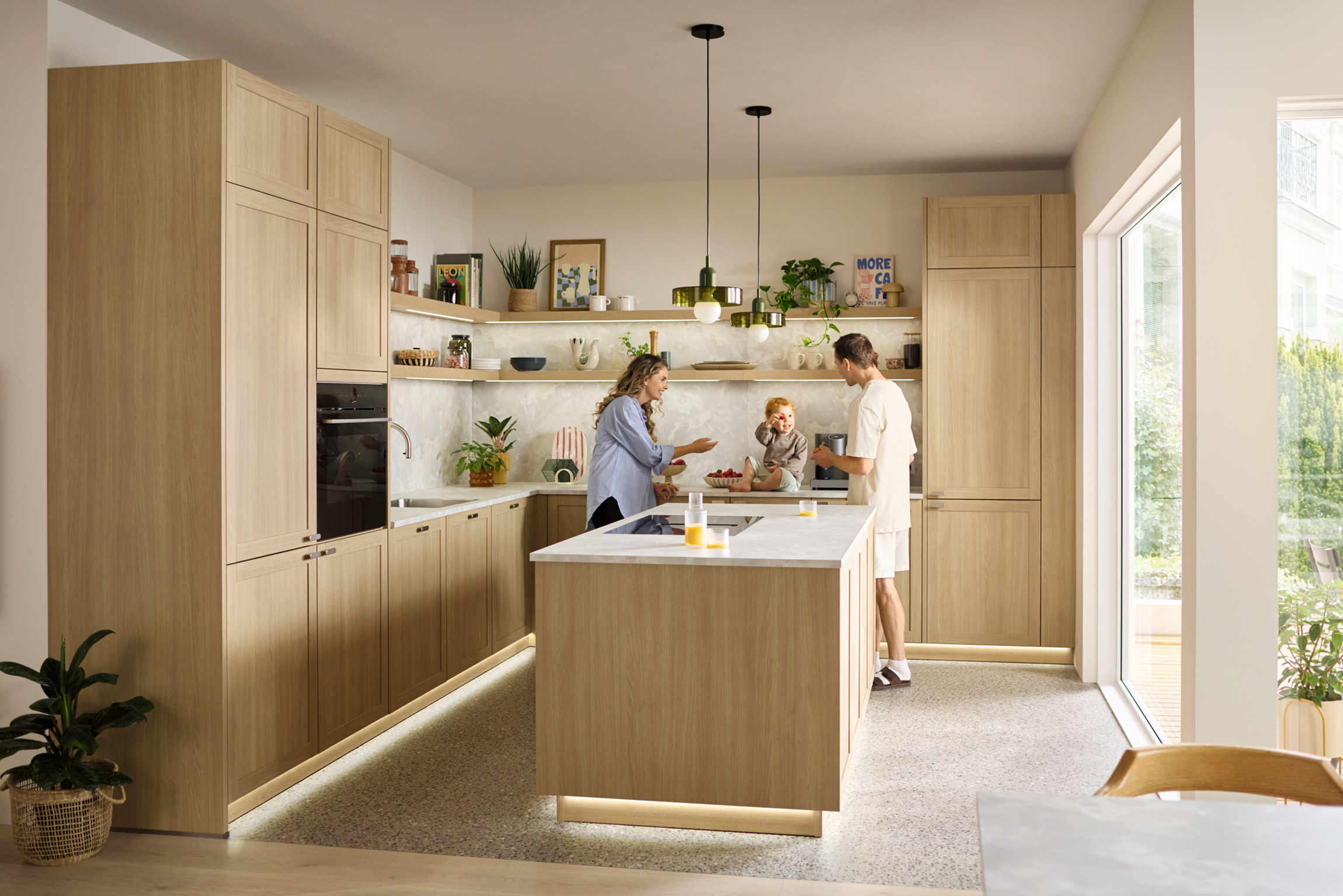
The seamless flow between kitchen, living room, laundry room, and bedrooms defines Cross Elements, Scavolini's project that brings together furniture systems and solutions for different areas of the home. The design combines storage modules, integrated walkways, and wall coverings to create customized configurations with a coordinated aesthetic. Maxidoor, Freepass, Air Box, Sail, and Vertical System allow for seamless integration between spaces, adapting both the layout and finishes to the specific needs of each home.
Full-height furniture and passageways between rooms
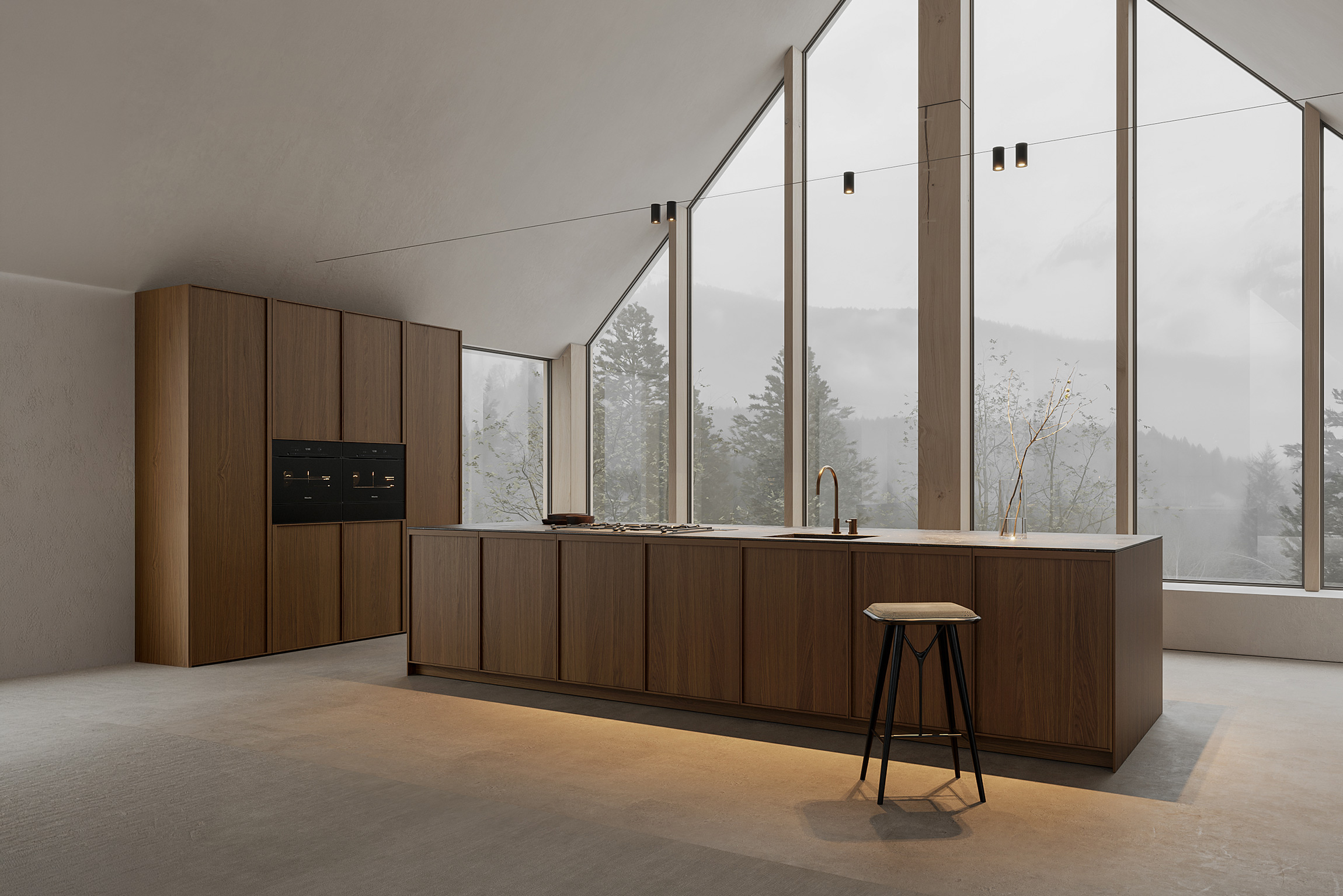
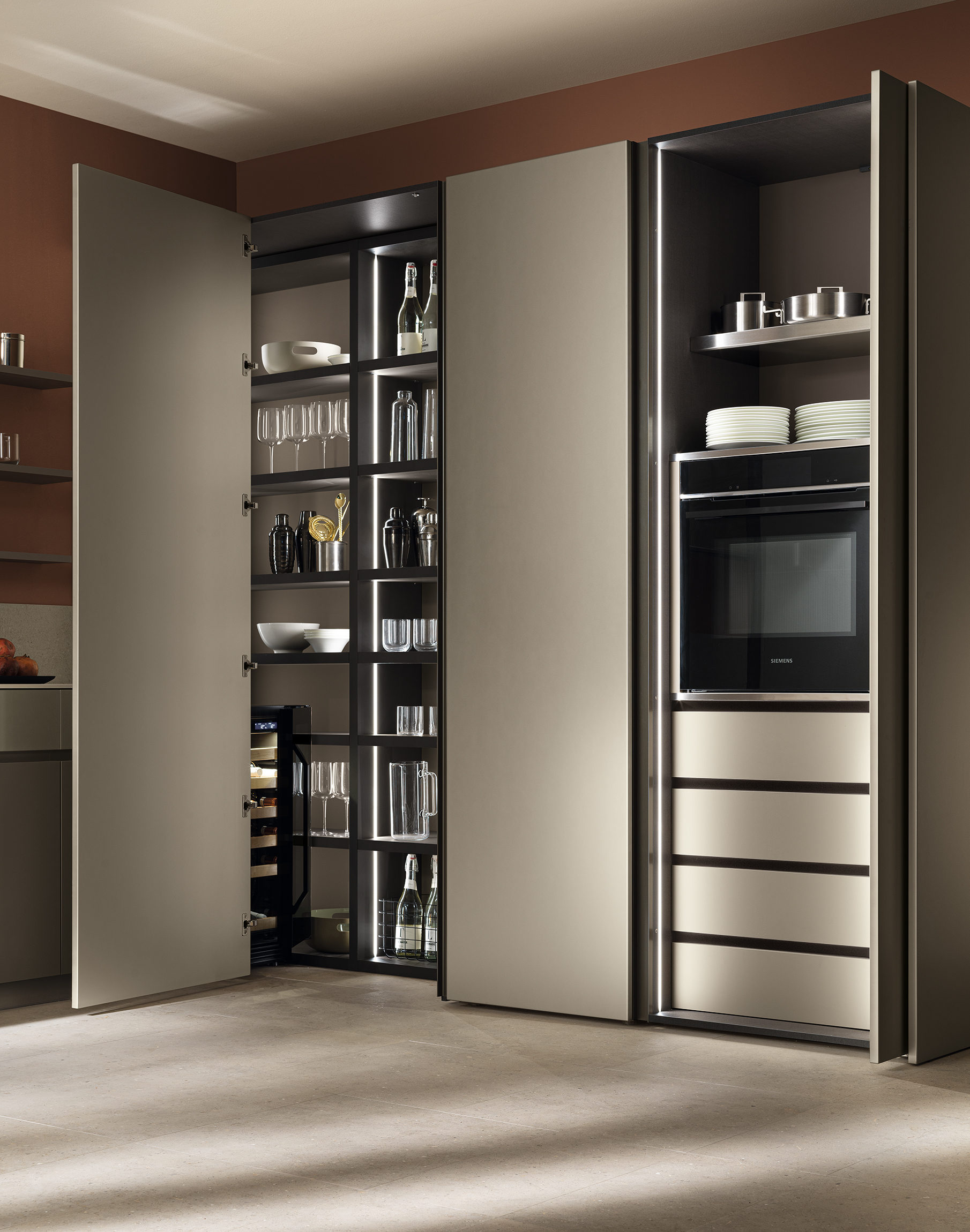
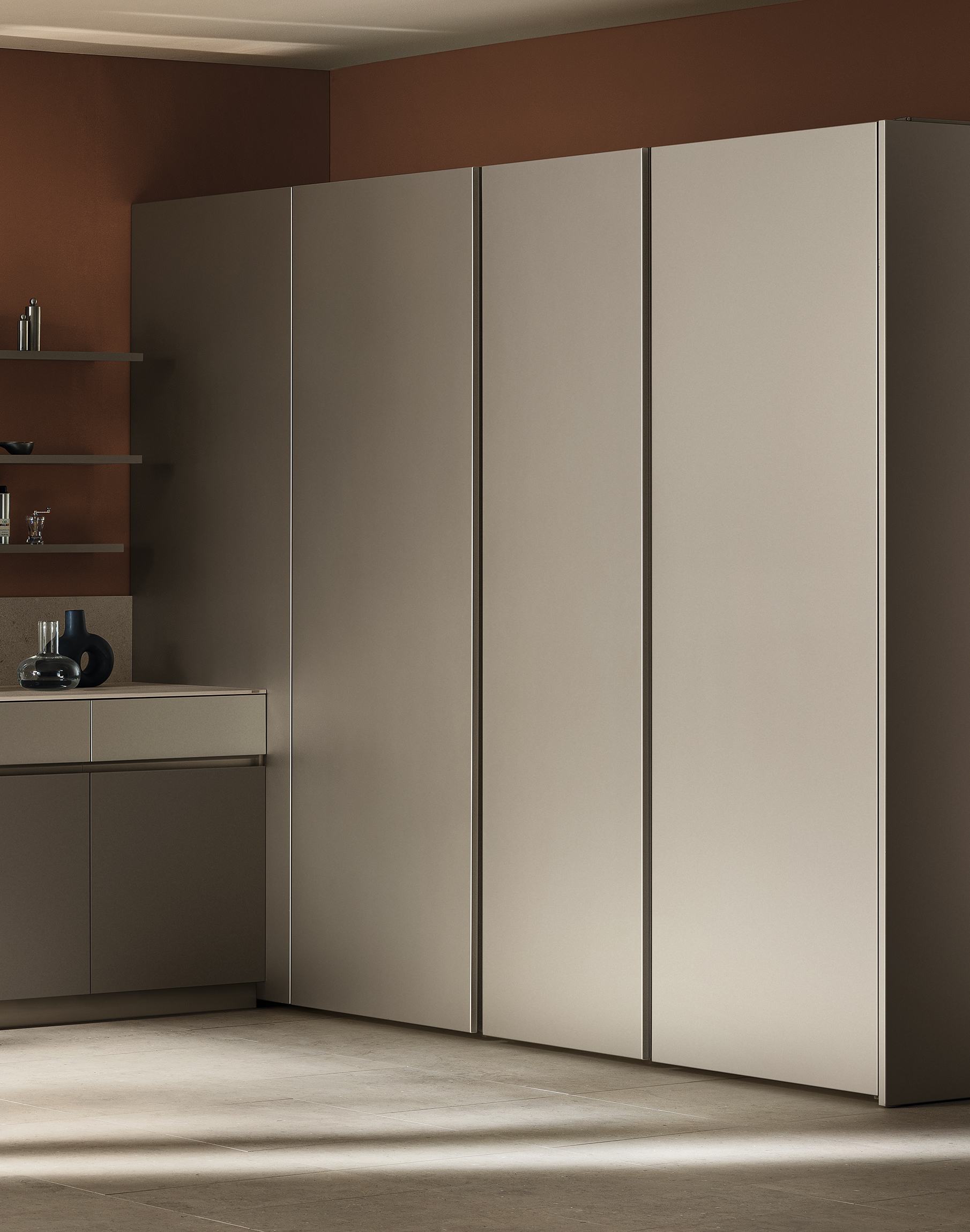
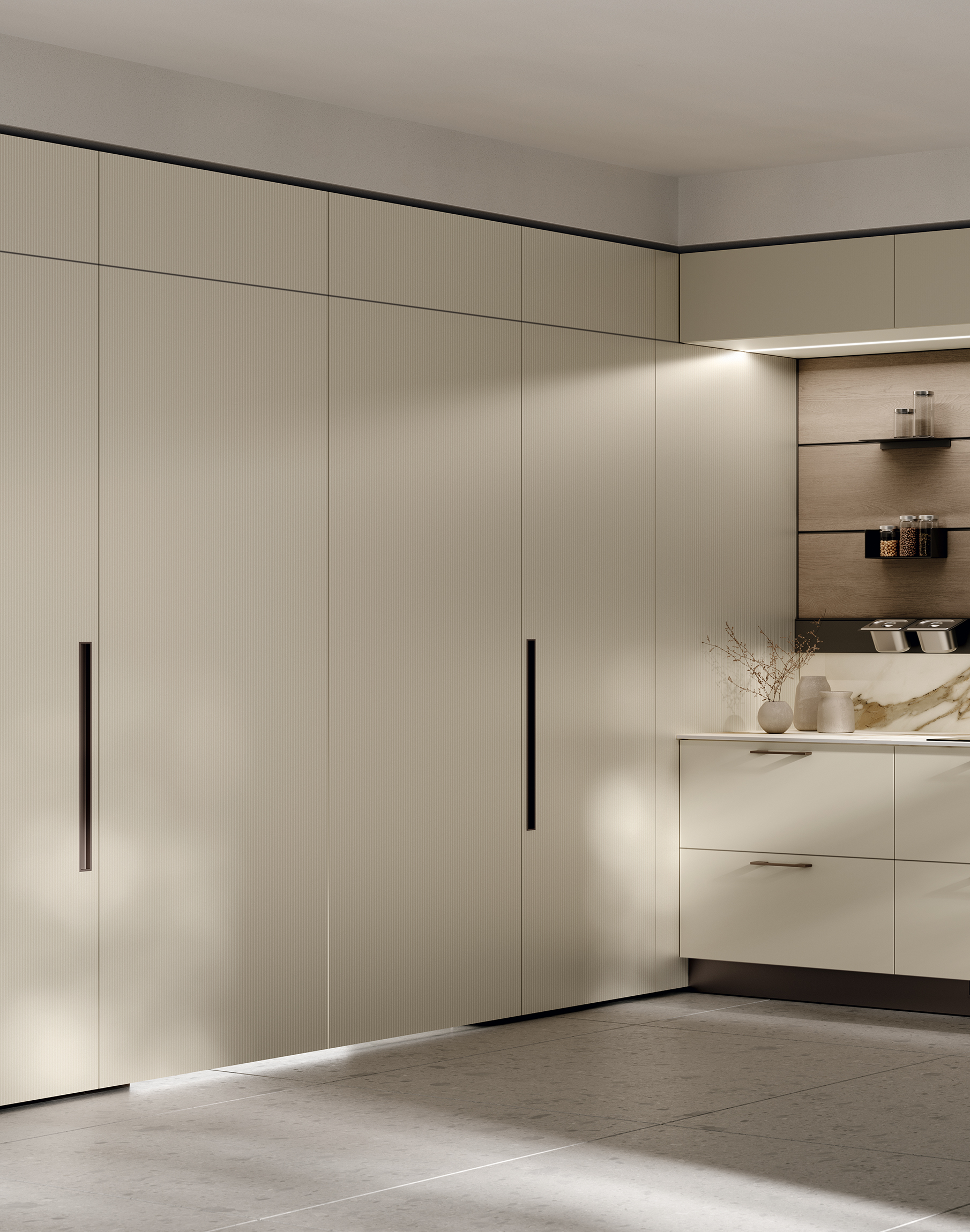
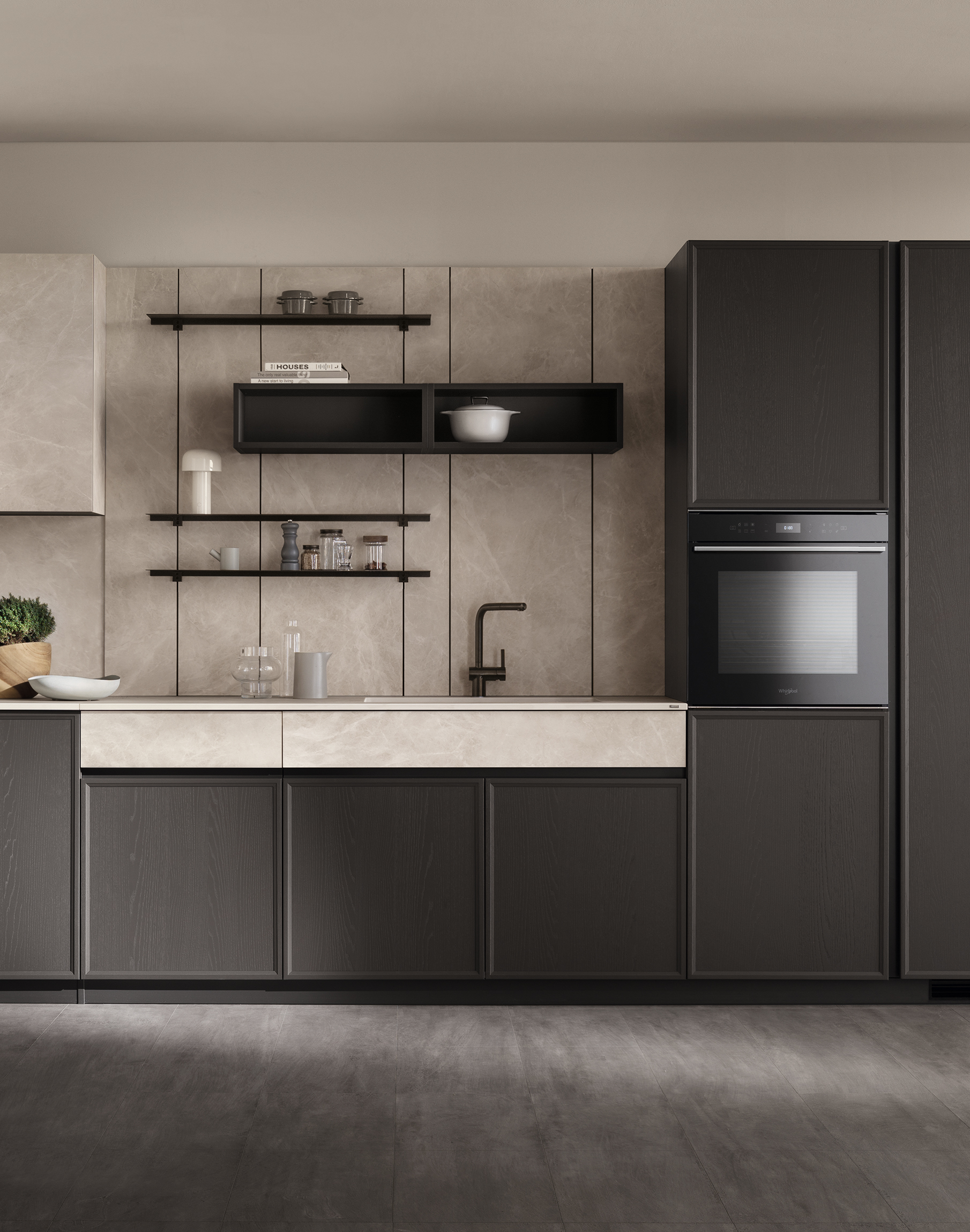
Maxidoor combines full-height cabinets with a minimal two-centimeter plinth , reducing the visual presence of the base to achieve a clean-lined composition. Available for tall cabinets and base units behind the island, it can be customized with grooves or handles. In the Poetica kitchen, designed by Vuesse, this solution integrates the Switch cabinet, the refrigerator, and a pantry equipped with the Fluida modular wall system.
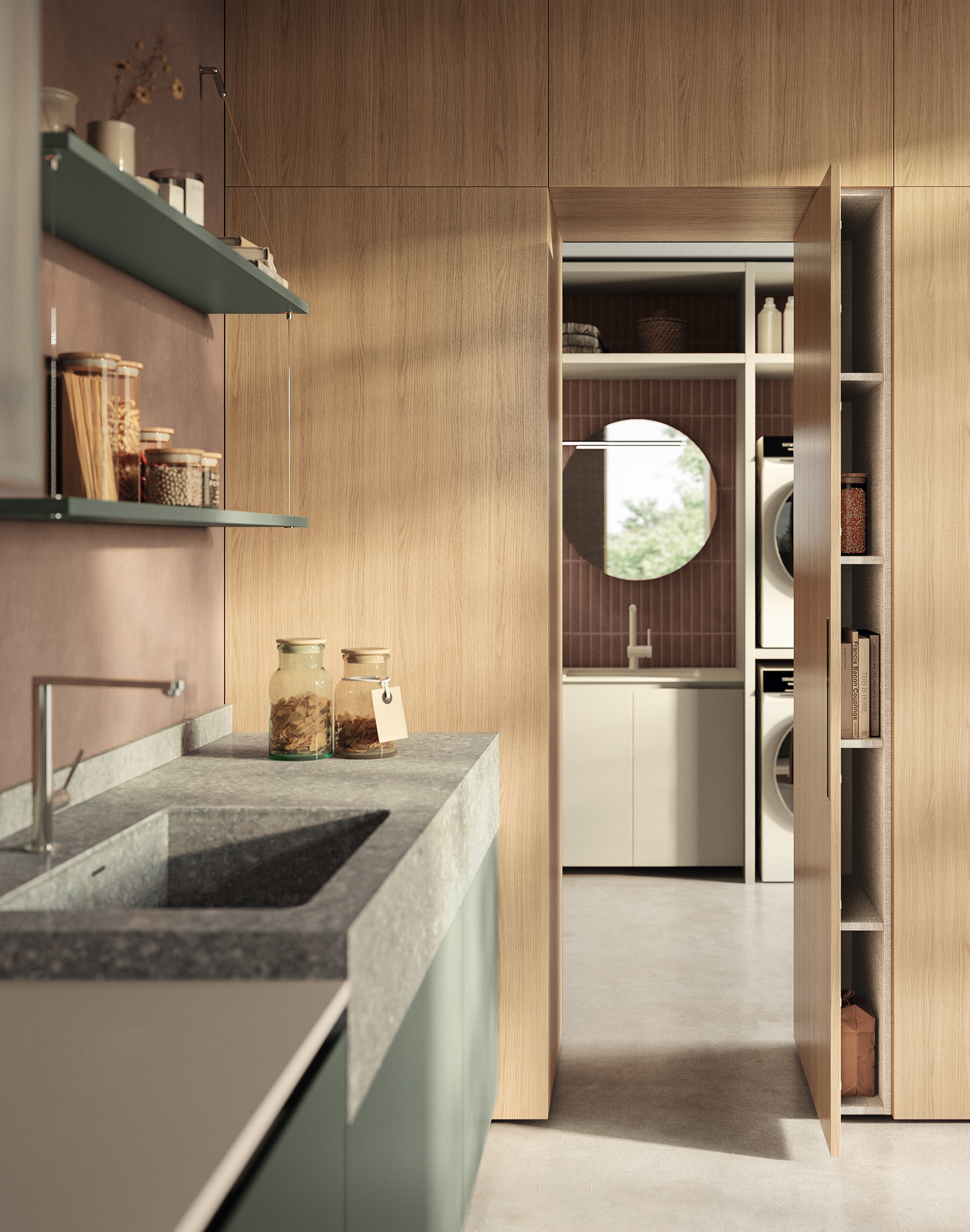
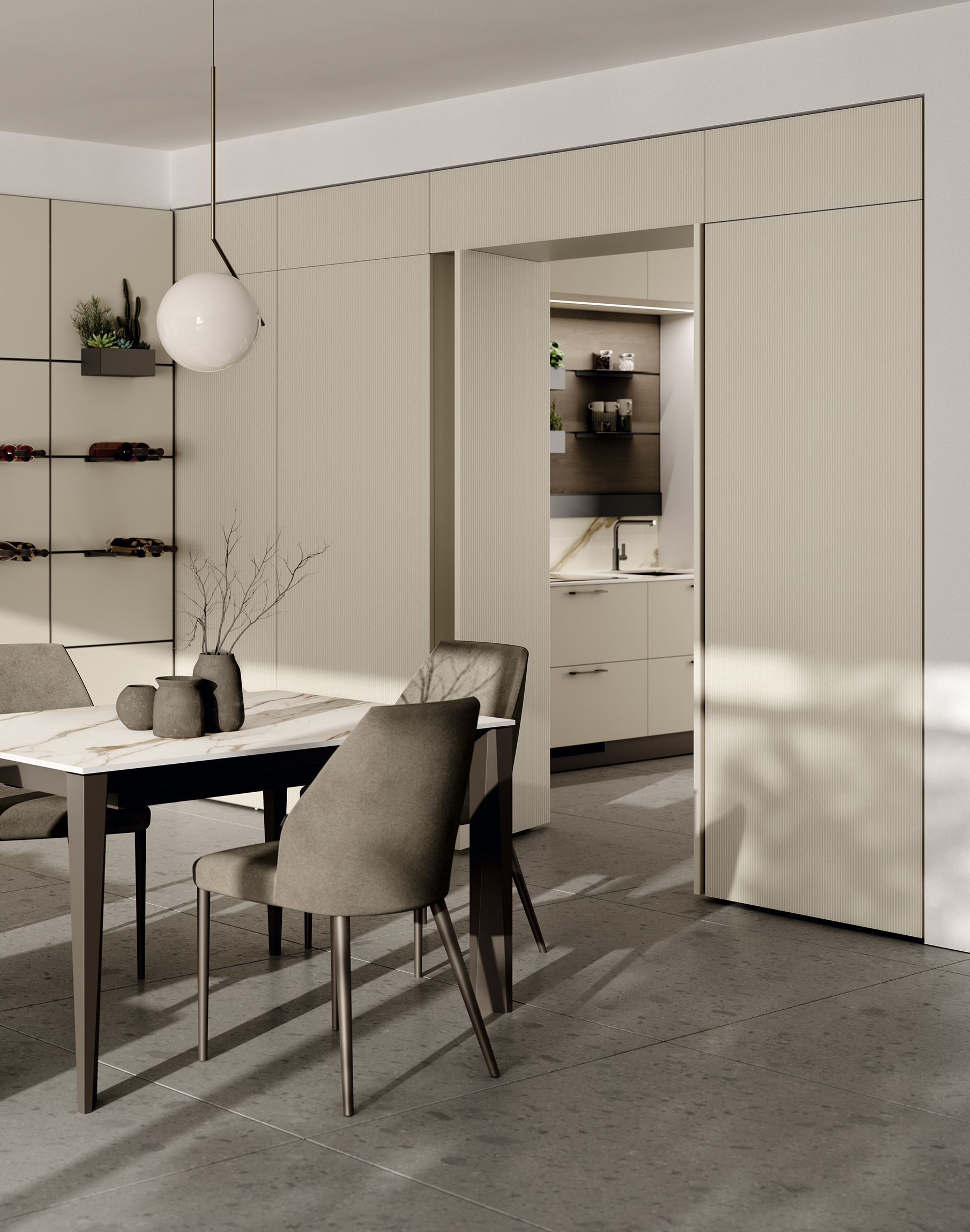
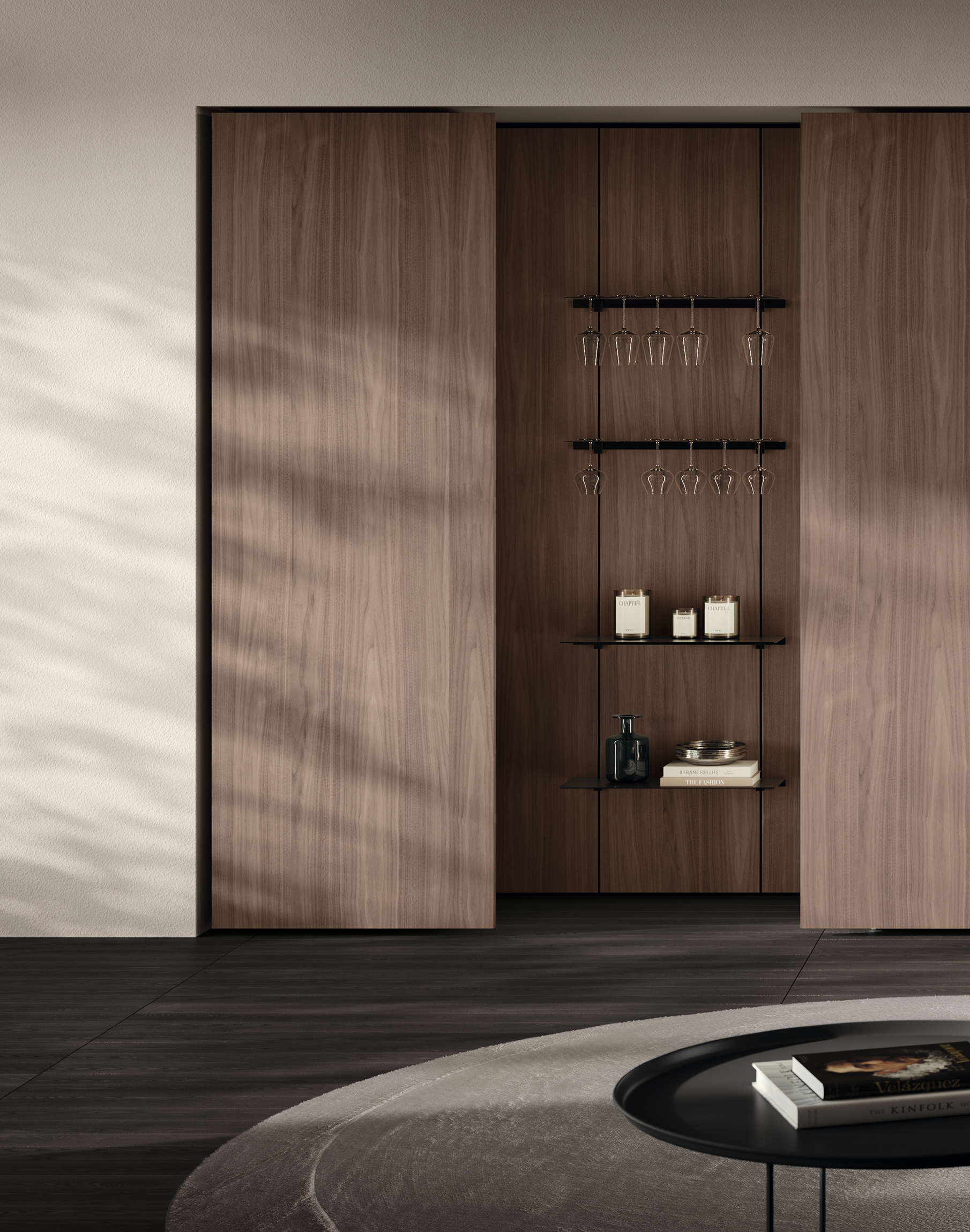
The connection between spaces is achieved with Freepass, a modular system that integrates interior doors into the furniture . It can be combined with a single- or double-door partition wall and with the Fluida system, incorporating push-to-open mechanisms and an interior handle for closing. It can also be installed in the center of the room by mounting it to the ceiling, allowing discreet access to pantries or laundry rooms while maintaining the continuity of the overall design.
Air Box and Sail bring new forms of storage
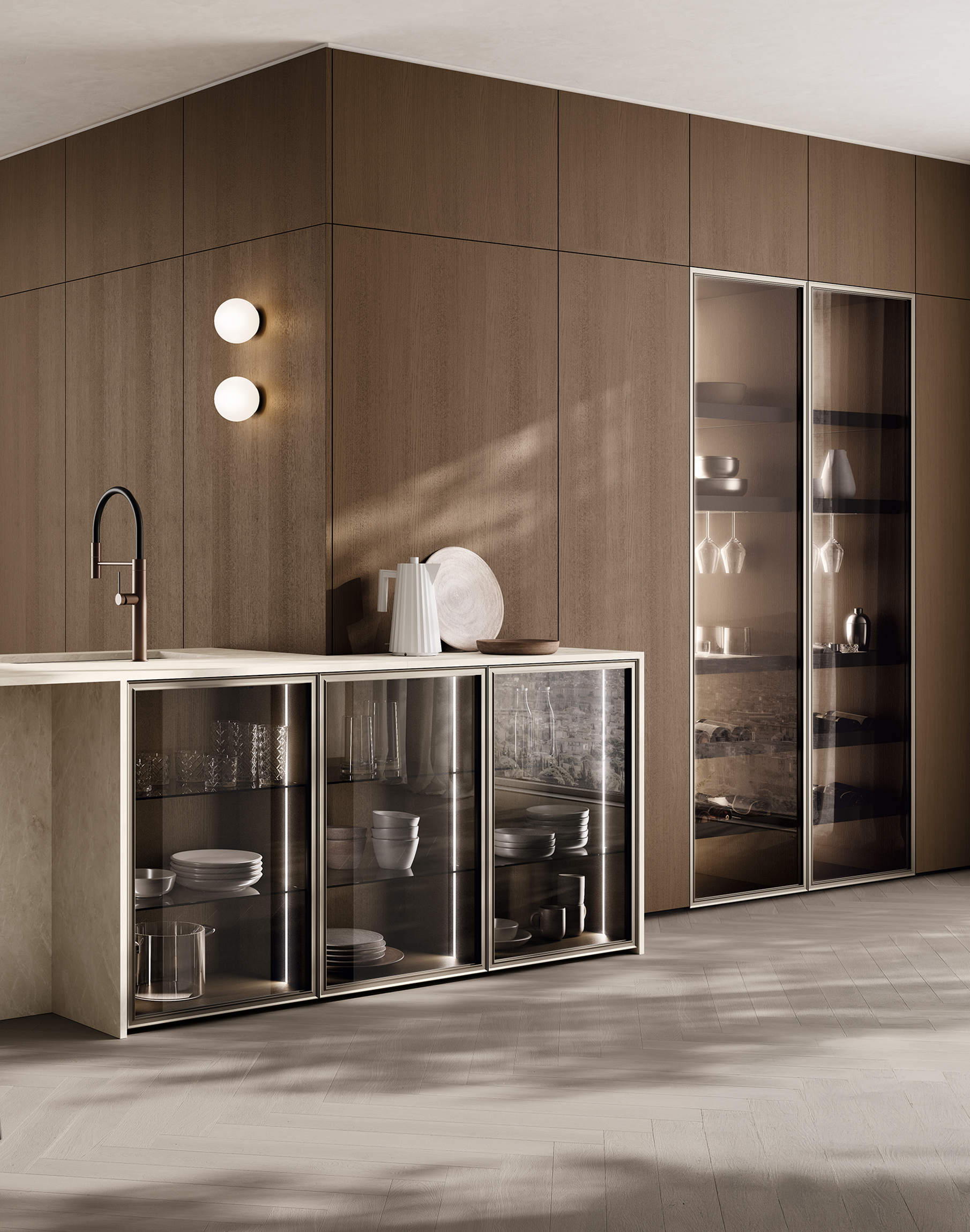
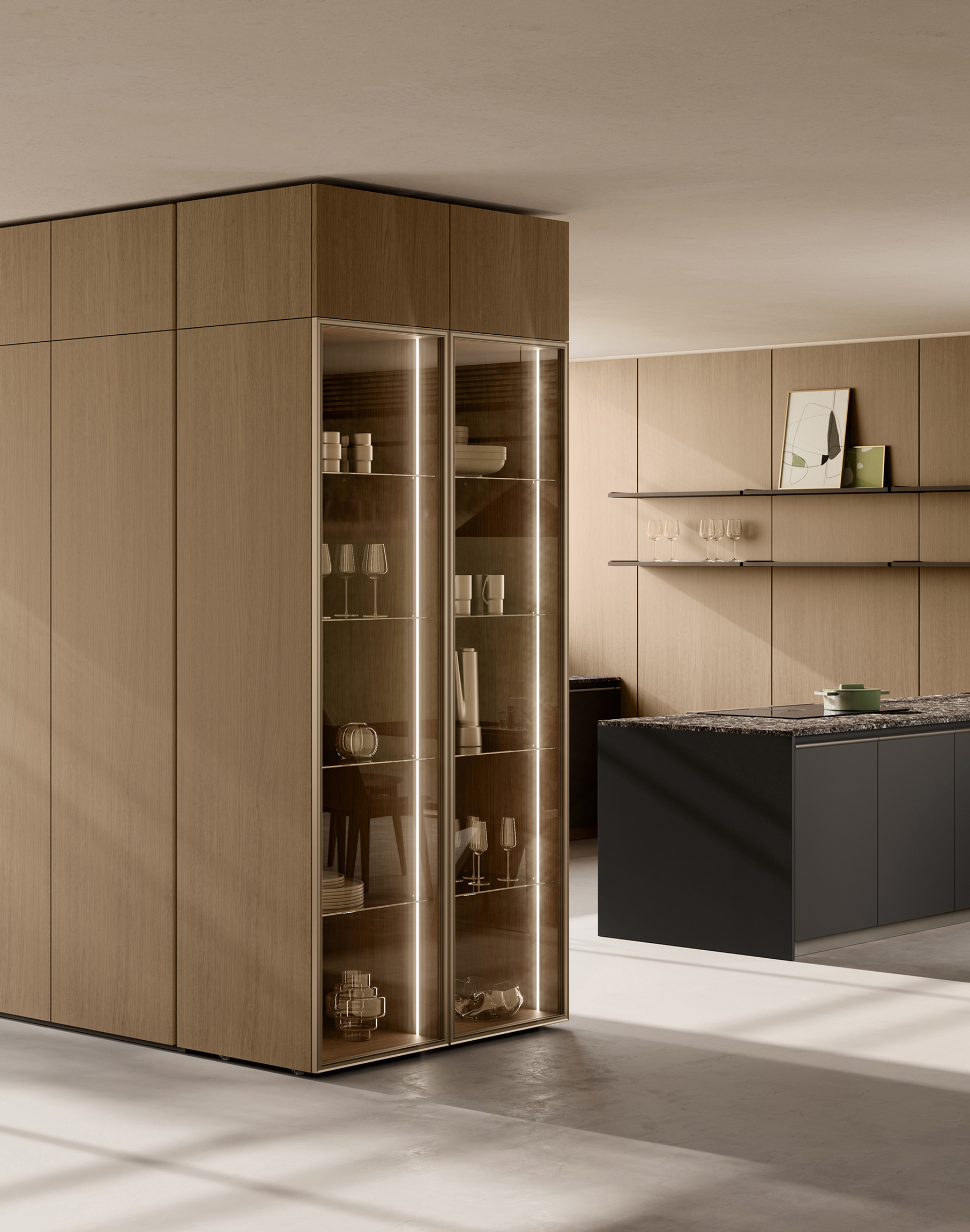
Available for tall, low, and column units, Air Box combines a decorative melamine structure with aluminum-framed doors . The frames are offered in anthracite gray and champagne, with flat or molded profiles, while concealed hinges maintain clean lines. The Stilo compositions, designed by Spalvieri & Del Ciotto, and Regola, by Vuesse, showcase this solution with molded champagne profiles and clear Bronze glass.
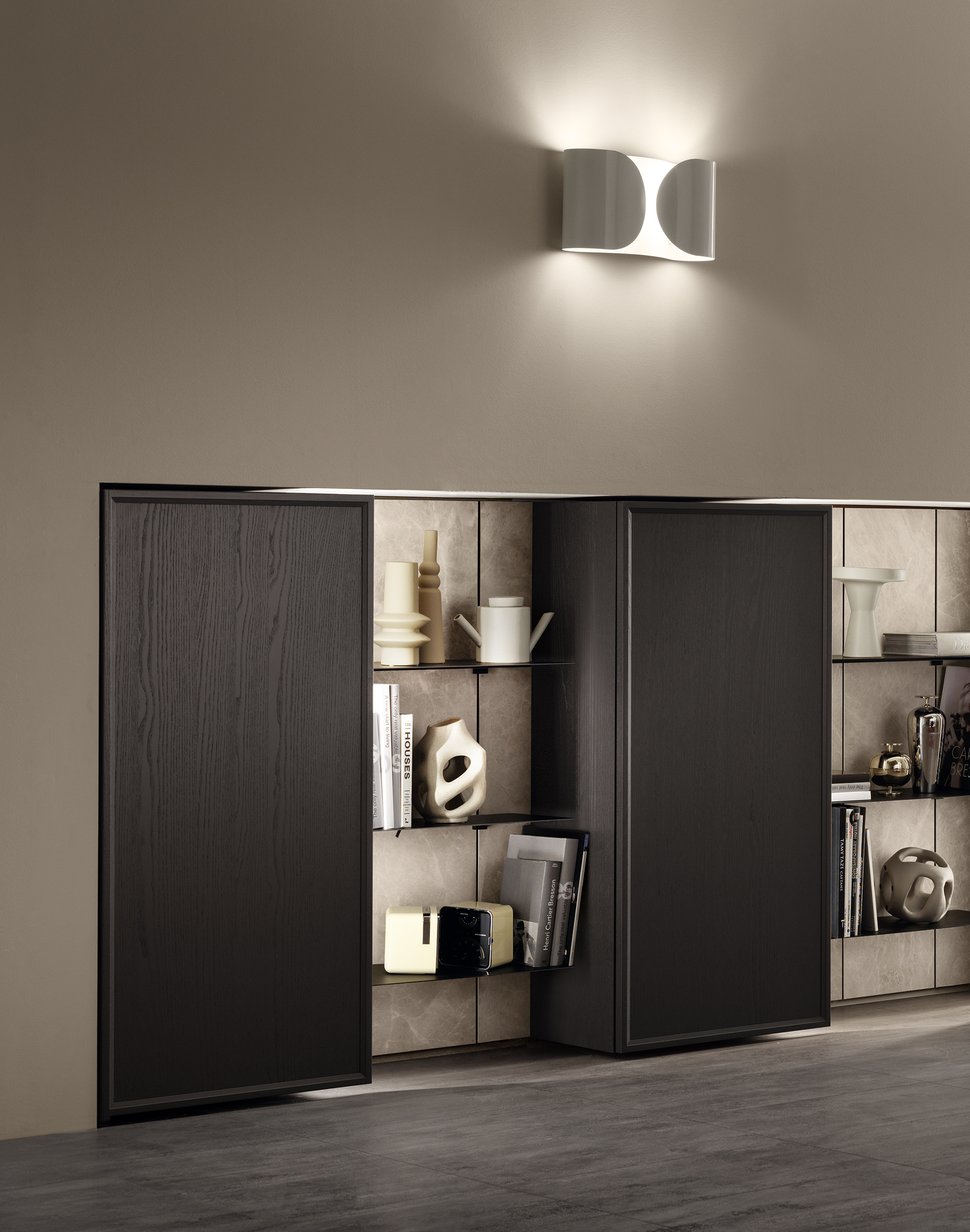
The Sail modules incorporate a protruding door that functions as a side handle , a detail that defines their design and facilitates opening. Available for tall cabinets and columns, they introduce a play of solid and void volumes into the overall design. In Essenza, they appear in decorative Walnut Classic melamine alongside the Vertical System, while in the Poetica living room, they are combined with porcelain stoneware cladding and metal shelves.
Vertical System coordinates walls and equipment
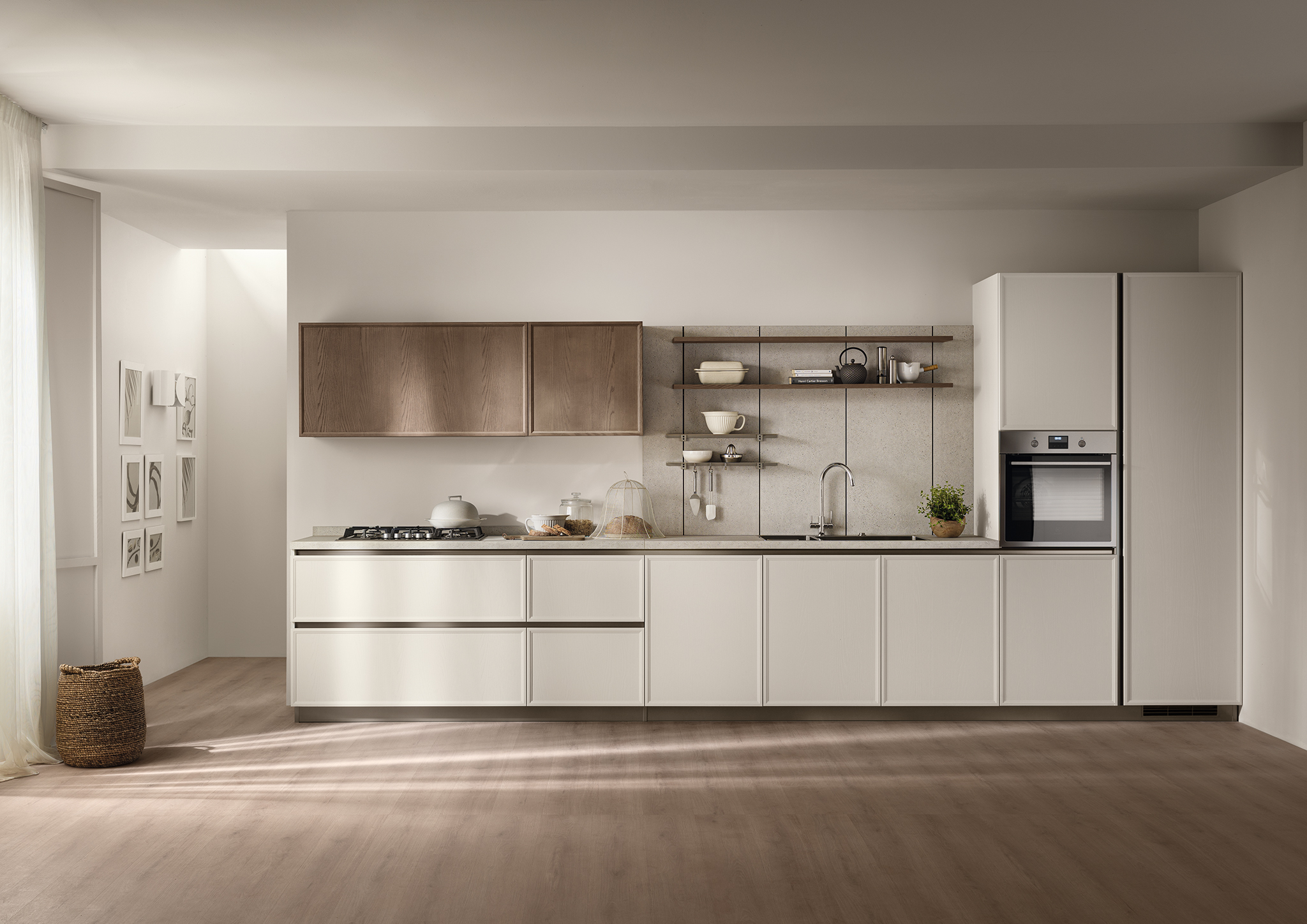
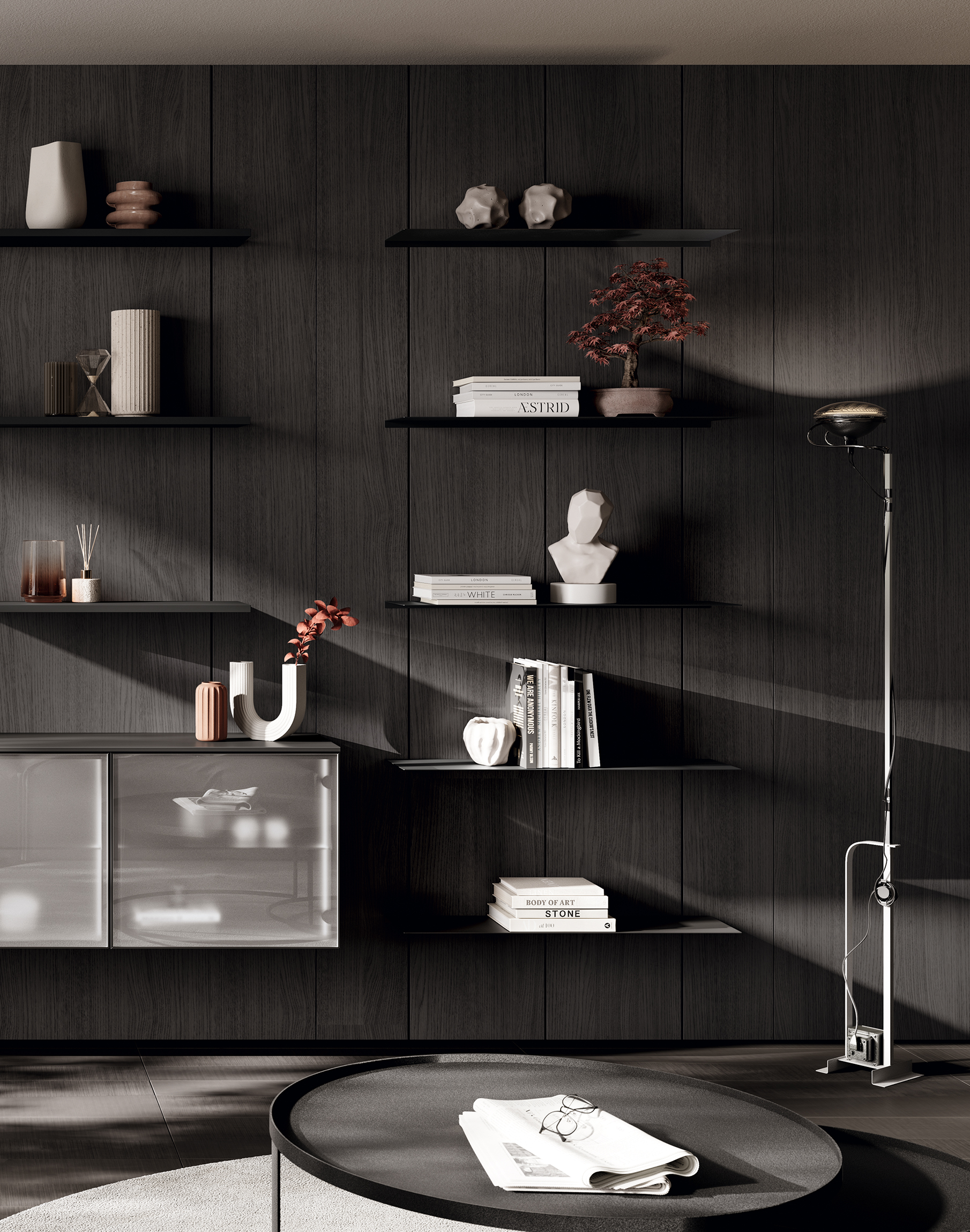
The proposal is completed by Vertical System, a wall cladding made up of vertical panels and profiles onto which open elements, shelves, and metal accessories can be incorporated. The system allows for the integration of support and display surfaces directly into the wall, extending organizational possibilities beyond closed cabinets and maintaining a visual connection with the rest of the furnishings.
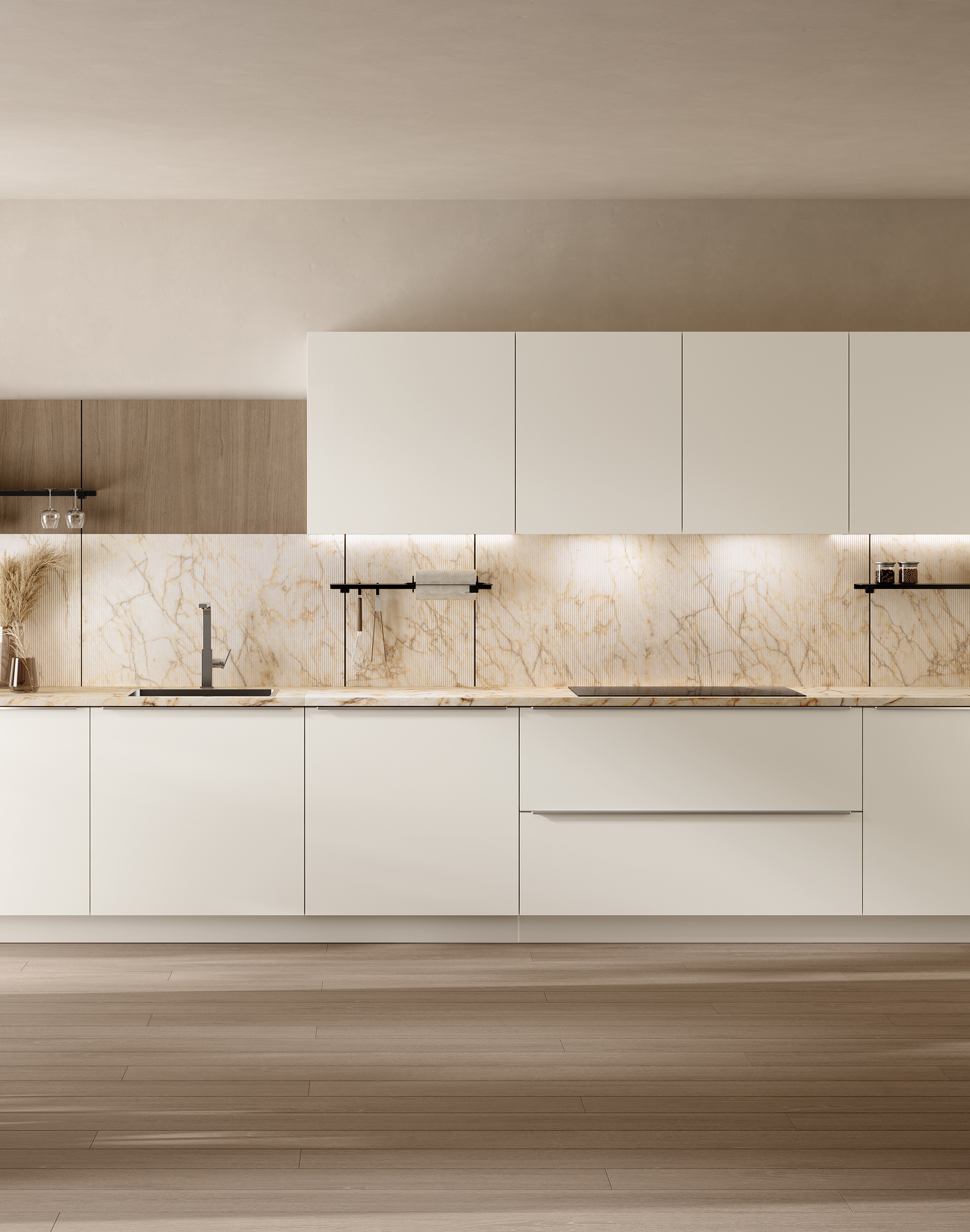
Its applications showcase different combinations of materials and finishes for kitchens and living rooms . In Moda, Vertical System combines Cristallo Macchiavecchia porcelain stoneware and Duna Oak veneer; in Poetica, it appears in Diamond Cream stoneware or Street Beige laminate versions. The Regola living room composition incorporates Encina Brownie decorative melamine panels and shelves in Iron Gray matte lacquer and black metal, adapting the system to each environment.
contact@scavolini.com
+39 0721 4431
Via Risara, 60/70, 61025
Montelabbate (PU), Italy
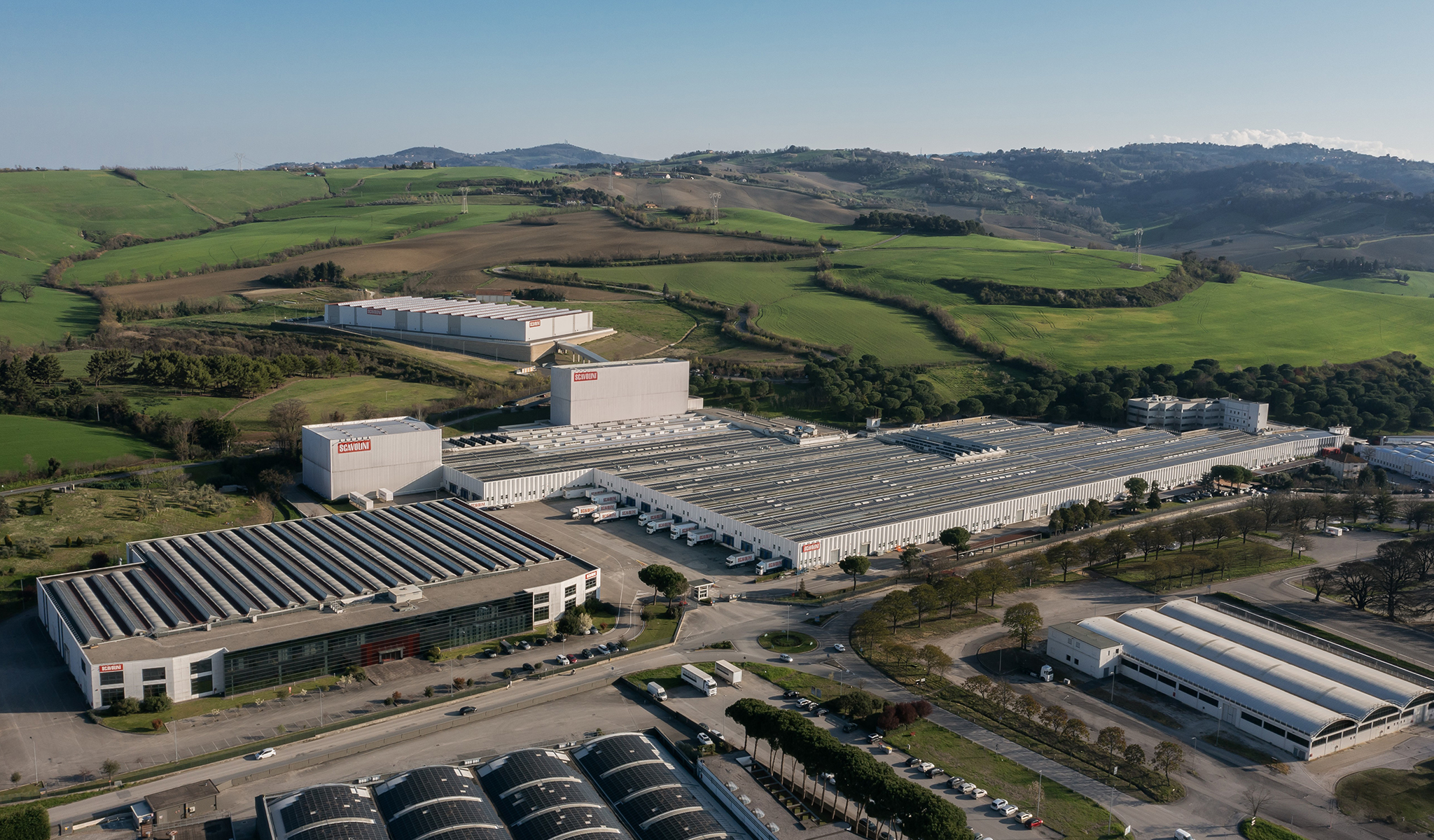
Scavolini, founded in 1961 in Pesaro by brothers Valter and Elvino Scavolini, is today an international benchmark in kitchen design, recognized for its evolution and its identity linked to Made in Italy. The company has grown from artisanal origins to an industrial group with a global presence , combining quality, innovation, and a strategic market vision.
Throughout its history, the brand has expanded its offerings beyond the kitchen to include bathrooms, living rooms, and other domestic spaces. The concept of a "total home look" defines its current approach , where different environments are connected through a common language based on aesthetic coherence and functionality.
Today, Scavolini reinforces its commitment to sustainability through responsible processes and the use of certified materials. The kitchen is integrated into a broader domestic system , where design and function coexist naturally.